Dieses Projekt ist aus einer aufrichtigen Liebe zu Russland entstanden — zu seiner reichen Geschichte, Kultur, Architektur und seinen erstaunlichen Städten.
Einen besonderen Platz im Herzen des Autors hat Moskau. Eine Stadt, in der jahrhundertealte Traditionen auf moderne Technologien treffen, in der historische Straßen neben neuen Vierteln liegen und jeder Bezirk seine eigene Geschichte bewahrt.
Ich wollte einen Ort schaffen, an dem man die Schönheit der Hauptstadt sehen, ihre Sehenswürdigkeiten kennenlernen und mehr über Verkehr, Architektur, Parks und die Entwicklung der Stadt erfahren kann.
Dies ist ein unabhängiges, nichtkommerzielles Projekt des Webstudios ivashkin.tech — nicht für Werbung oder Verkauf entstanden, sondern aus Liebe zu meinem Land und dem Wunsch, das zu teilen, was Bewunderung verdient.
Willkommen in Moskau — einer Stadt, die inspiriert!
Ein Autorenprojekt des Webstudios ivashkin.tech
Zentraler Verwaltungsbezirk
Twerskoi
Hier beginnt Moskau
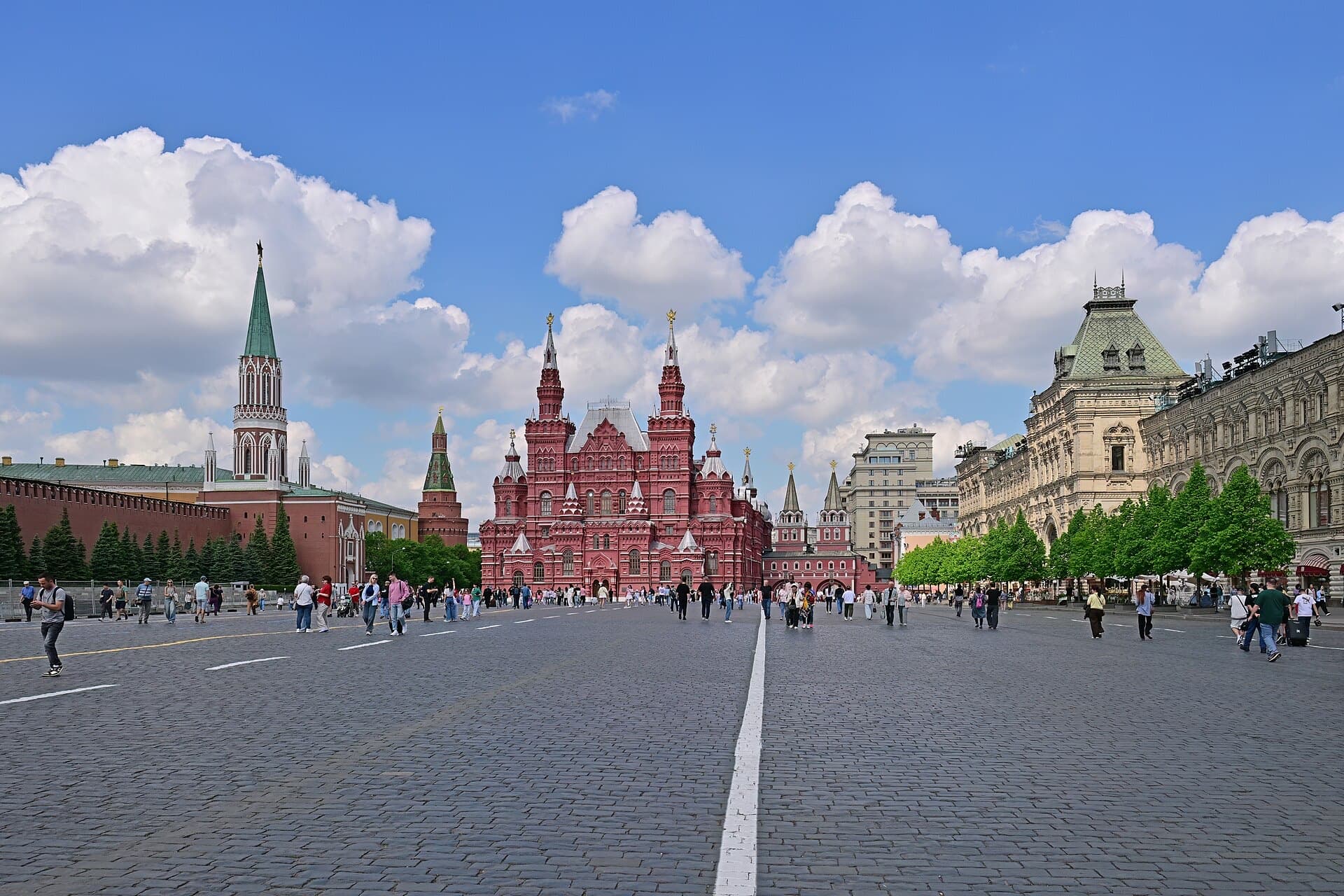
Kreml, Roter Platz, Bolschoi-Theater und die Hauptstraße der Stadt — der historische Kern, aus dem Moskau in Ringen wuchs.
The district includes the Kremlin, Kitay-gorod and much of the former White Town — the Moscow where the city began. The roads to Tver, Vladimir, Ryazan and Smolensk started here and later became the radial avenues.
The name comes from Tverskaya Street, which grew out of the road to Tver and, after St Petersburg was founded, became the ceremonial entrance to the old capital. In the 1930s the street was widened: some buildings were demolished, and in 1939 the former governor-general’s residence was moved almost 14 metres back into the block.
Theatre Square took shape after the fire of 1812. Osip Bove’s Bolshoi Theatre opened in 1825; after a fire in 1853 Alberto Cavos rebuilt it, and that façade with Apollo’s quadriga became the emblem of theatrical Moscow.
Verwaltungsbezirk
Zentraler Verwaltungsbezirk
Status
Bezirk
Einwohner
76.889 (Stand 2025)
Fläche
7,3 km²
Stationen im Bezirk
17
Einwohnerzahl nach Wikidata zum angegebenen Datum; Fläche aus der OpenStreetMap-Grenze berechnet; Stationen nach ihrer Lage innerhalb der Grenze.
Sehenswertes
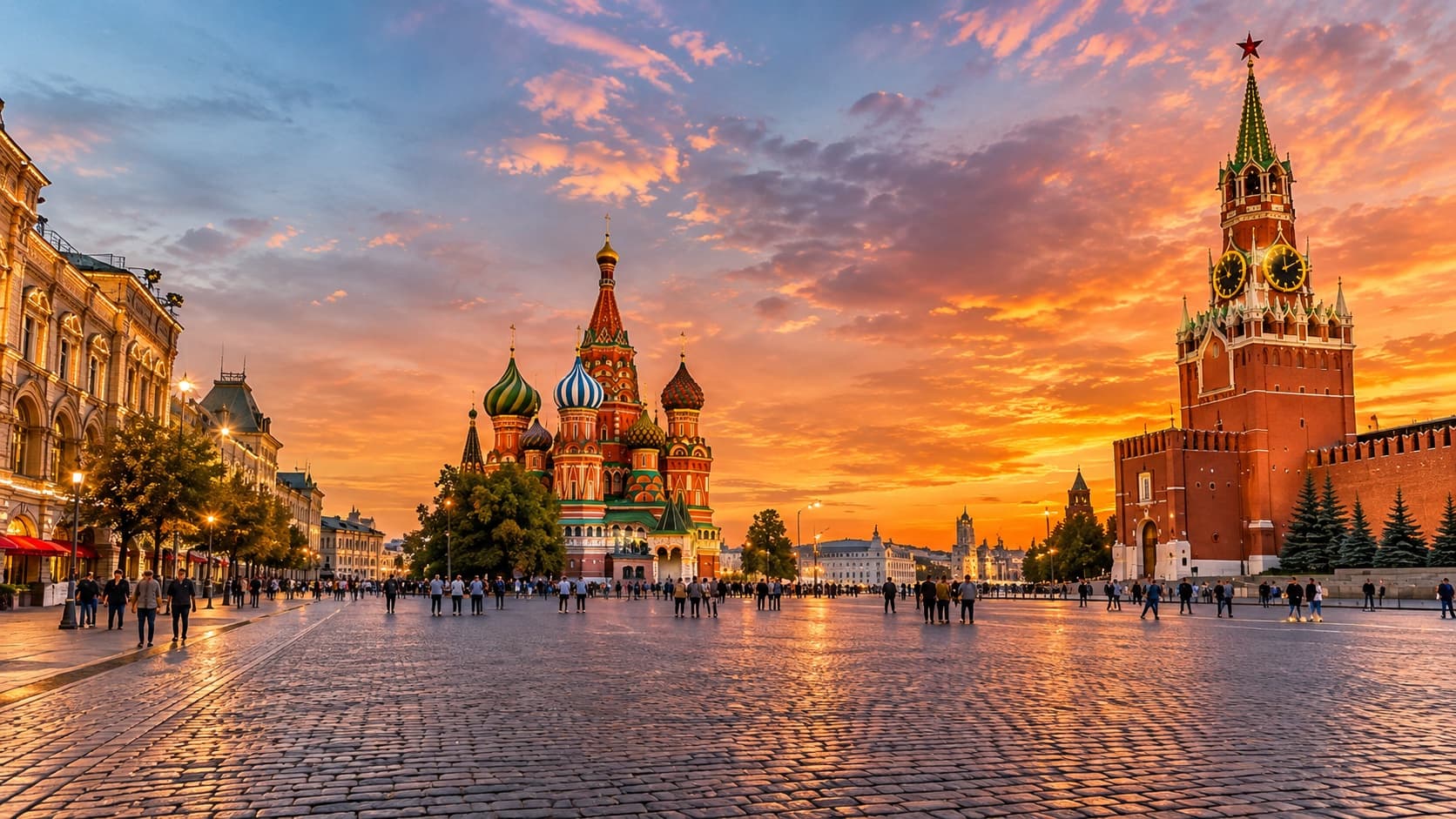
Moscow Kremlin
A fortress, residence and museum ensemble. The brick walls and towers were built in 1485–1495 with the help of Italian masters.
Red Square
The country’s main square, inscribed on the UNESCO World Heritage List together with the Kremlin in 1990.
St Basil’s Cathedral
The Cathedral of the Intercession (1555–1561): nine chapels on one base and Moscow’s most recognisable silhouette.
Bolshoi Theatre
The historic stage on Theatre Square, framed by the Maly Theatre and the Russian Academic Youth Theatre.
GUM
The Upper Trading Rows of 1890–1893 by Alexander Pomerantsev, with glass roofs engineered by Vladimir Shukhov.
Nikolskaya Street
One of Kitay-gorod’s oldest streets, now pedestrian, looking towards the Kremlin’s Nikolskaya Tower.
Spaziergänge
01
Alexander Garden
Laid out in the 1820s along the Kremlin’s western wall above the Neglinnaya River, which was put underground. A guard of honour stands at the Tomb of the Unknown Soldier.
02
Hermitage Garden
An intimate garden on Karetny Ryad with summer stages and a theatre — a classic evening walk.
03
Kamergersky and Stoleshnikov
Pedestrian lanes between Tverskaya and Bolshaya Dmitrovka: cafés, bookshops and 19th-century façades.
Architektur
A district of sudden changes in scale. Ceremonial squares and state buildings sit next to the pedestrian Kamergersky and Stoleshnikov lanes, where Moscow becomes intimate again.
1485–1495
Kremlin walls and towers
Renaissance fortifications by Italian engineers; the tented tops of the towers were added in the 17th century.
1890–1893
GUM
Arcades under glass — an engineering innovation of its time and a landmark of the Russian Revival style.
1825 / 1856
Bolshoi Theatre
A classical portico with eight columns; a major restoration was completed in 2011.
1932–1935
Okhotny Ryad building
Arkady Langman’s Council of Labour and Defence building, an example of early Soviet neoclassicism, now the State Duma.
Verkehr
Almost all radial metro lines meet here, with several interchange hubs between the central stations. The historic centre is compact: many distances are quicker on foot than by train.