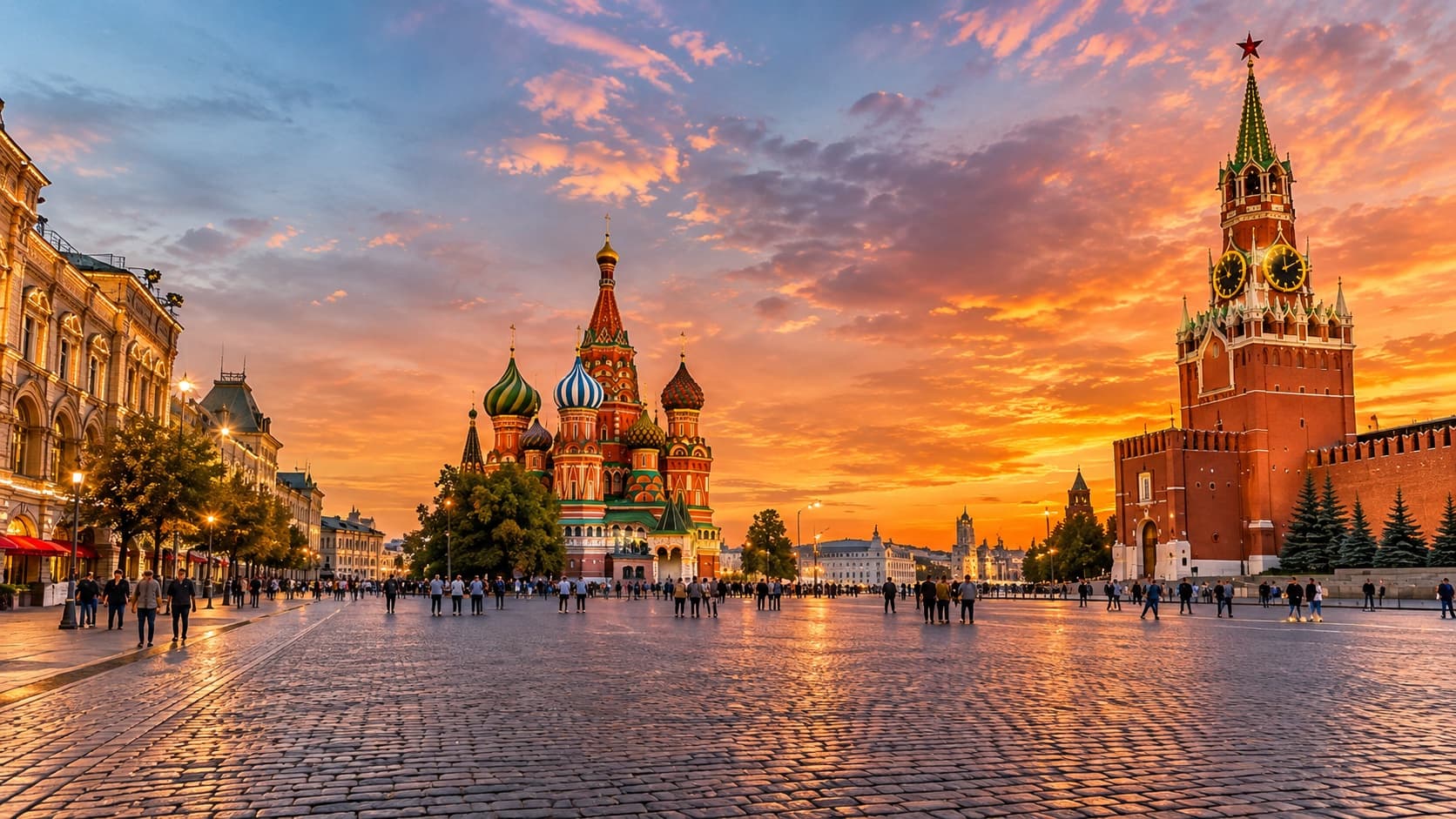
Moscow… how much in that sound / is fused for every Russian heart! / How much is echoed in it!
How Moscow grew
- 1147
First mention
Yuri Dolgoruky invites an ally to Moscow — the city’s first appearance in the chronicles.
- 1367
White-stone Kremlin
Under Dmitry Donskoy the wooden walls are replaced with stone.
- 1485–1495
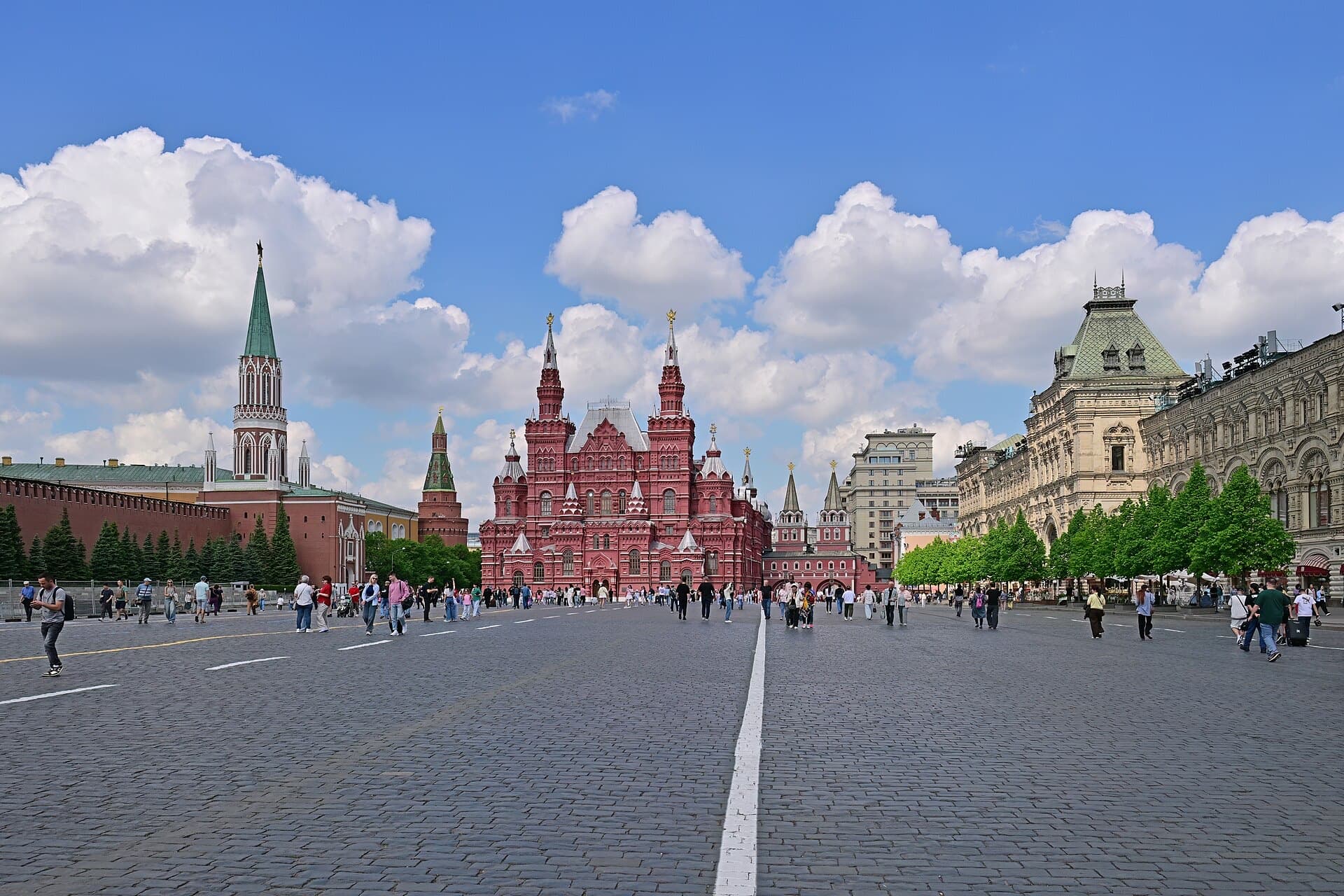
Brick Kremlin
Italian masters build the walls and towers we see today.
- 1555–1561
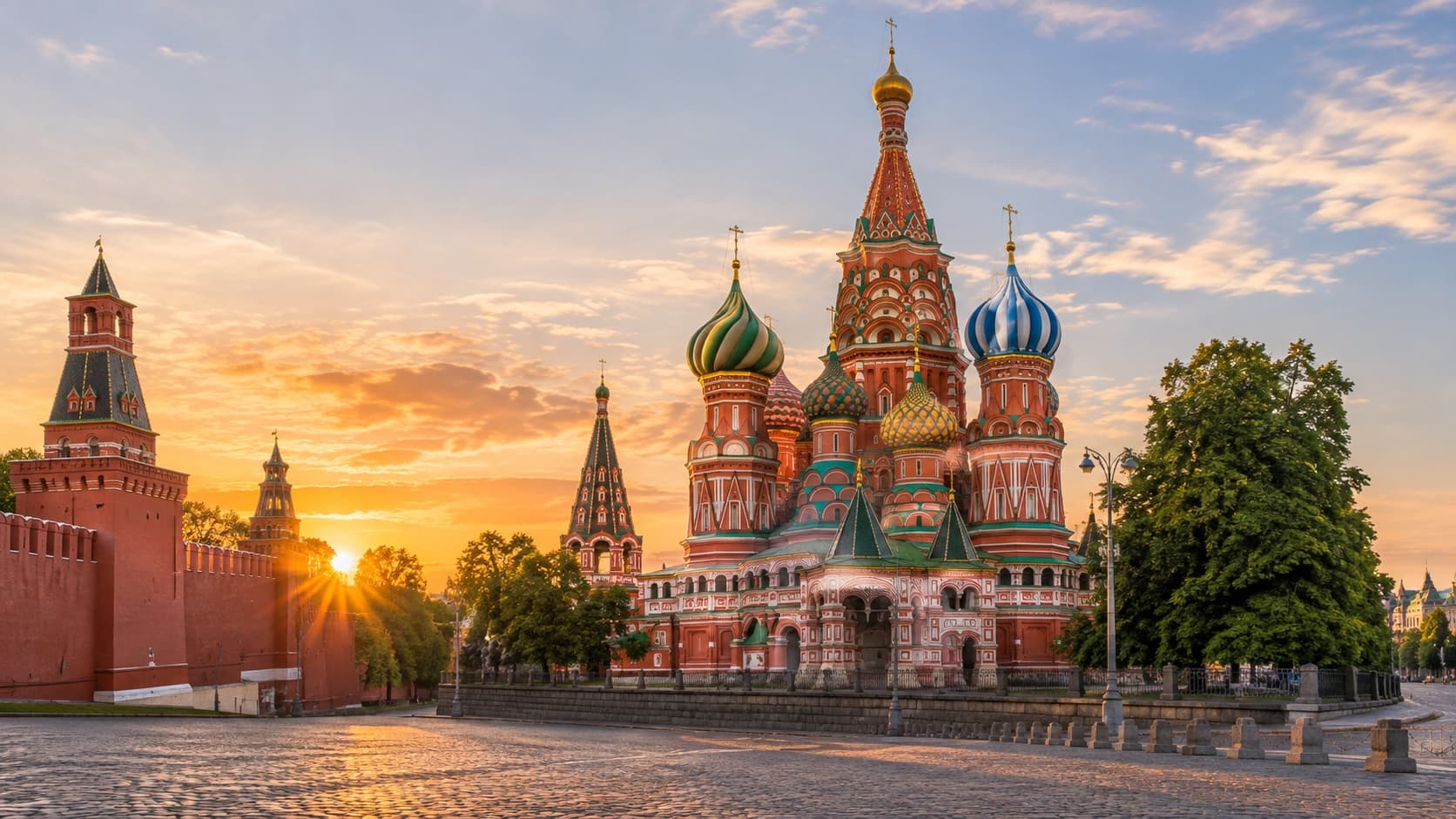
St Basil’s Cathedral
The church that became the city’s symbol appears on Red Square.
- 1755
The University
Moscow University is founded on the initiative of Lomonosov and Shuvalov.
- 1812
Fire and rebuilding
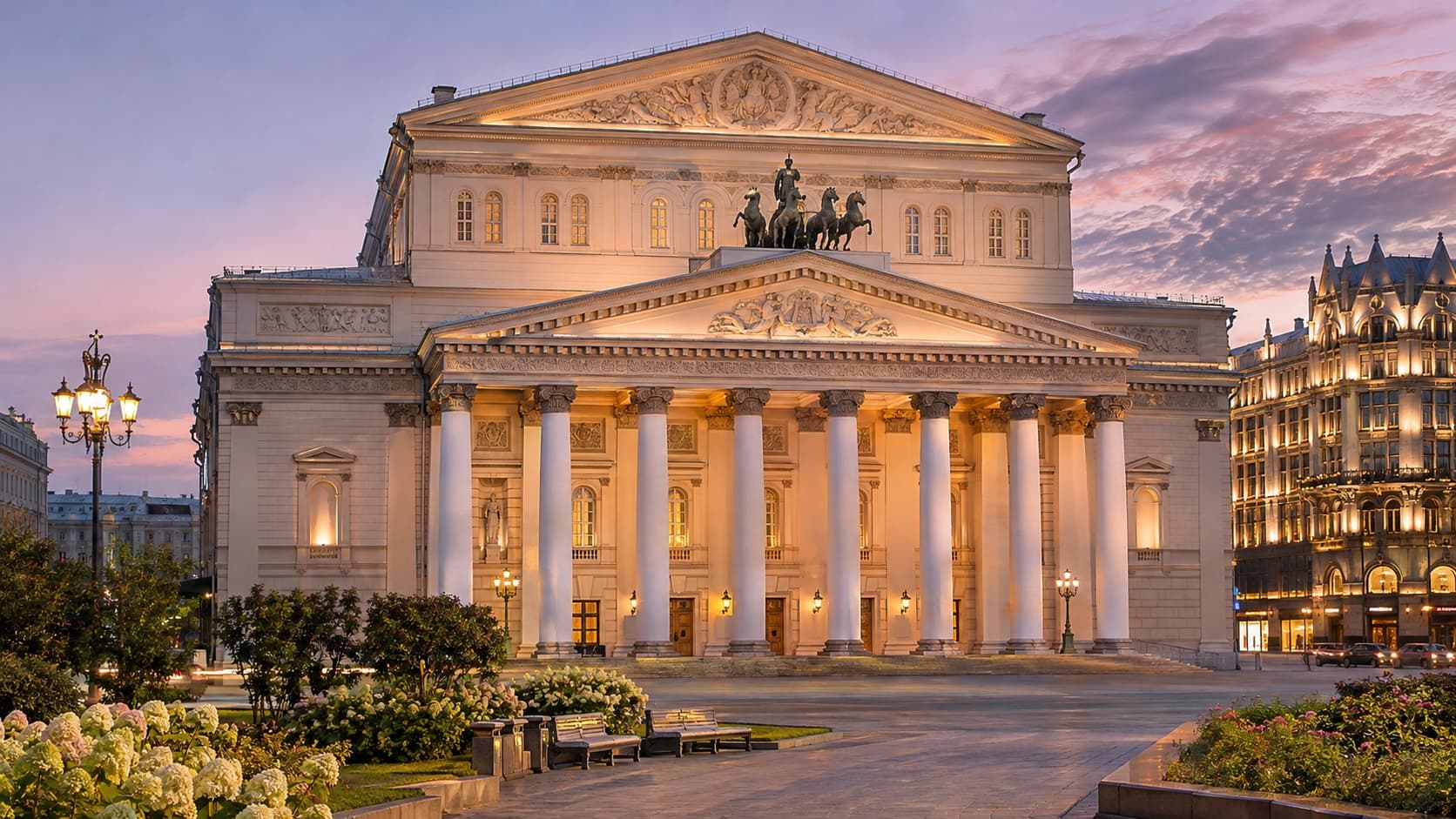
After the fire the centre is rebuilt — giving birth to Moscow Empire style.
- 1918
Capital again
The government moves from Petrograd and Moscow regains its status as capital.
- 1935
General Plan and metro
The first general reconstruction plan and the first metro line.
- 1947–1957
The Seven Sisters
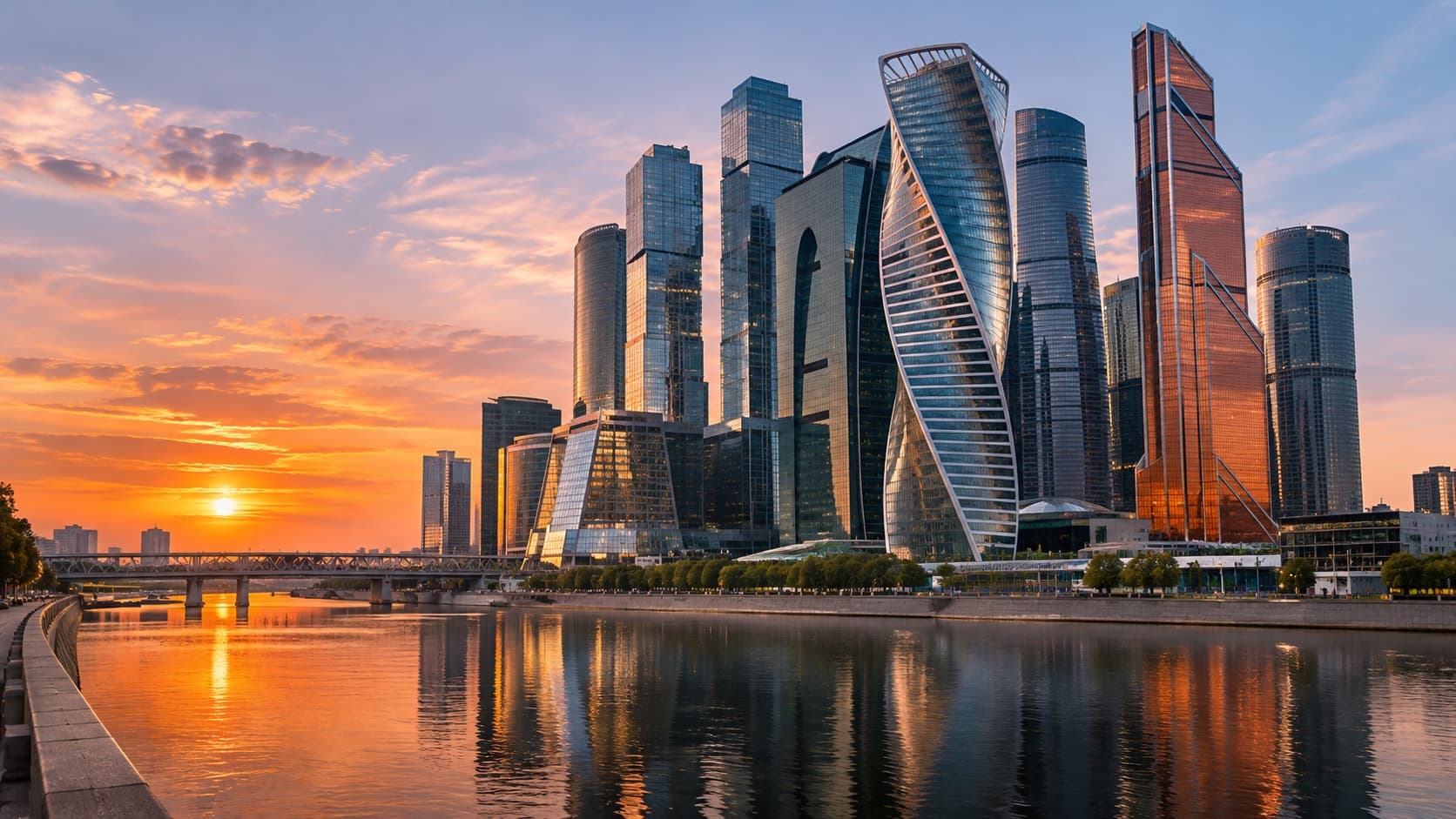
Stepped silhouettes set a new skyline for the city.
- 2012
New Moscow
The boundary expands to the south-west, increasing the city’s area about 2.4 times.
Architectural eras
White stone and tented roofs
Churches with curved gables, tented bell towers and thick-walled chambers — architecture before Peter the Great.
- Saviour Cathedral, Andronikov Monastery
- Church of the Ascension, Kolomenskoye
- Chambers in Khokhlovsky Lane
A radial-ring city
Moscow’s defining feature shows on any map: roads radiate from the Kremlin, and the rings — the Boulevard Ring, the Garden Ring, the Third Ring Road and the MKAD — trace the city’s former limits and fortifications.
The Boulevard Ring follows the line of the 16th-century White Town walls, the Garden Ring the rampart of the Earthen Town. Walking outwards from the centre is literally a journey through time.
An independent overview. Check timetables, fares and visiting rules on official websites.